YOUR CART
- No products in the cart.
Subtotal:
€ 0


photography and text:
Terry A. Ratzlaff
archive material:
Greg Arp
design:
Rob van Hoesel
lithography:
Marc Gijzen
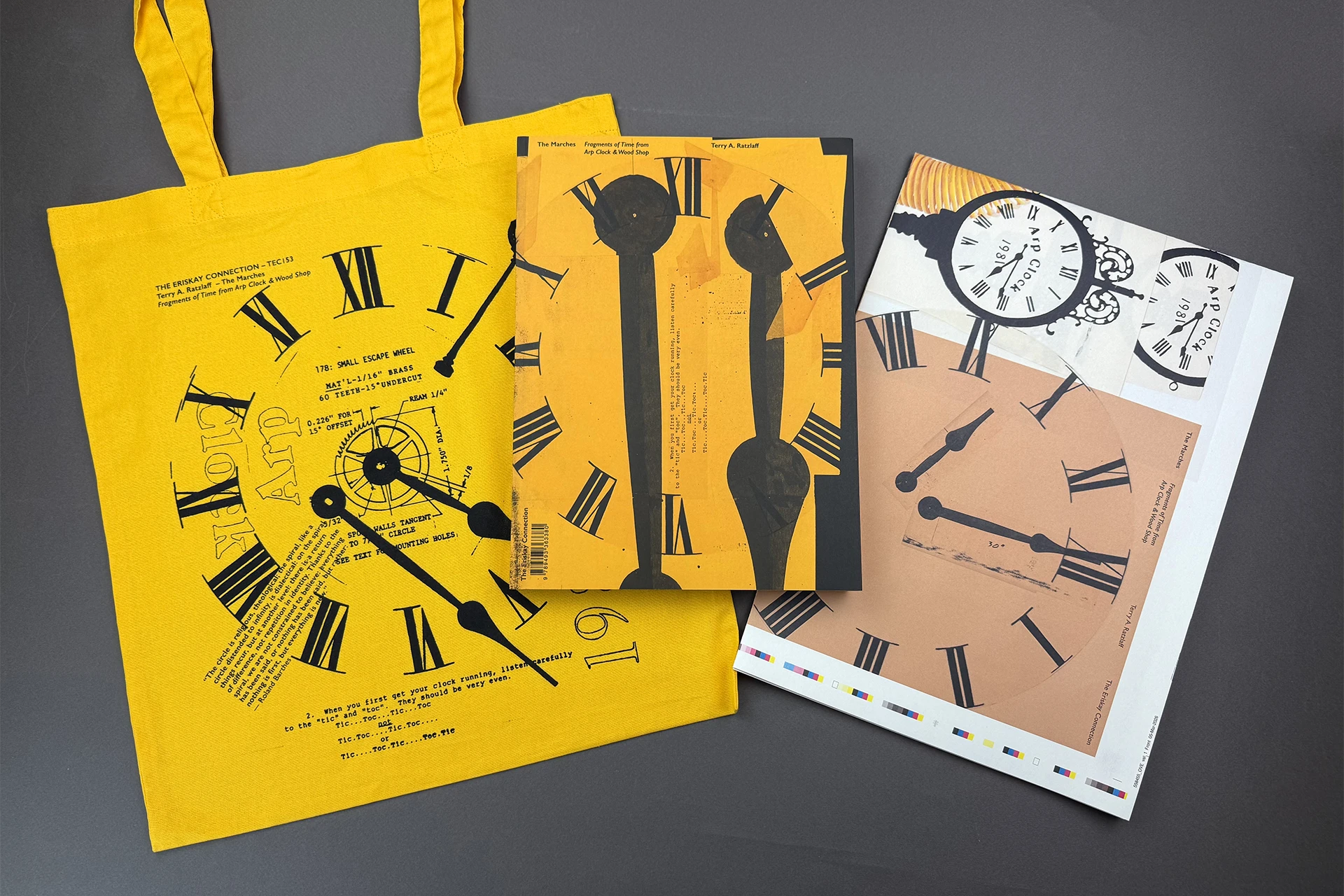
The Marches is a photographic project by Terry A. Ratzlaff (US), made in collaboration with horologist Greg Arp at Arp Clock & Wood Shop in Bennet, Nebraska. The project explores how people try to construct, measure, and control time, one of the most artificial systems humans have created. The clock shop is both a working repair space and a maze-like archive filled with memory, history, and material traces of time passing.
Inspired by the saying “one never knows the time inside a clock shop,” the project brings together two different ways of working. Arp repaired clocks, restoring their ability to mark time, while Ratzlaff’s photography pauses and suspends time. Through this exchange, time is treated not as fixed or linear, but as something experiential, elusive, and relational. The shop becomes a catalogue of many things: schematics, drawings, newspaper clippings, family photos, broken clocks, tools, machines, dust, insects, and other small remnants, each fragment bearing traces of past lives and labour.
Working entirely within the constraints of the shop, Ratzlaff uses recovered objects to create photograms and assembled still lifes that point to the entanglement of all materials within the shop. Archival imagery and documents are collected as a way to trace the arc of time within the shop. These different processes overlap and repeat, forming layered groupings that highlight repetition, accumulation, and connection. Following Roland Barthes’s idea of time as a spiral, materials return in new forms; nothing is original, yet everything becomes new through reconfiguration.
The project changed deeply following Arp’s unexpected death 18 months into the collaboration. Facing his absence and the closing of the shop, Ratzlaff photographed 4,024 objects against neutral backgrounds. Stripped of their everyday function, these objects are seen anew in relation to one another, forming a detailed inventory that serves both as an act of preservation and a meditation on loss.
In The Marches, time runs backwards, beginning with Arp’s death in 2023 and moving back toward the founding of the shop in the late 1970s. The book reflects the wide-ranging nature of Arp’s practice in conversation with Ratzlaff’s work. In the end, the clock shop becomes a photographic labyrinth where time settles like dust, and memory, material, and loss exist together beyond time’s control.
The book includes an epilogue by writer and translator Julia Conrad.
Terry A. Ratzlaff is an artist whose work explores the relationship between time, vision, and modernity. His long-standing fascination with trains and time, and the point at which these forces intersect, shapes his current artistic research. Working primarily with photography and books, Ratzlaff examines how modern ideas of time, history, and technological progress are imposed on the human experience, and how these systems continually shape perception and consciousness. Ratzlaff lives and works in Lincoln, Nebraska, where he runs The Basement Window, a small imprint dedicated to producing small-edition artist books and boxed works. His practice places strong emphasis on materiality, sequencing, and the book as an object, extending his photographic work into tactile, time-based forms. He received his MFA from the University of Nebraska–Lincoln and is currently an Assistant Professor of Art at Nebraska Wesleyan University. Alongside his academic and artistic practice, Ratzlaff has worked with a wide range of national and international publications. His work has appeared in The New York Times, The Wall Street Journal, NPR, Bloomberg Businessweek, FT Weekend, Vanity Fair, Der Spiegel, VICE, Inc. Magazine, ESPN, 5280 Magazine, Newsweek, and The Financial Times, among others.
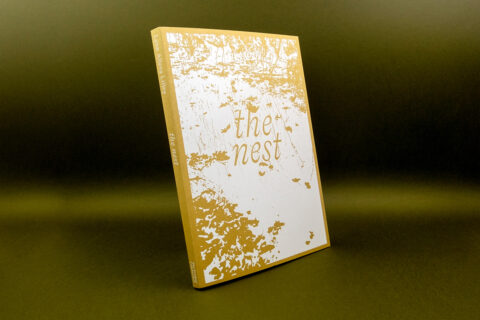
A silent observation of the vegetation and animals in the woods around Sligo Creek, arousing what is not directly perceptible to the senses.
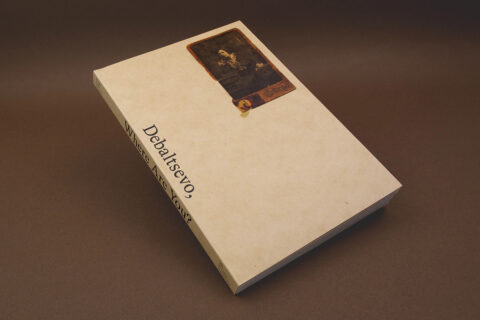
An exploration of a family history in the Donbas, Ukraine results in a puzzling search for a city that may never be found.
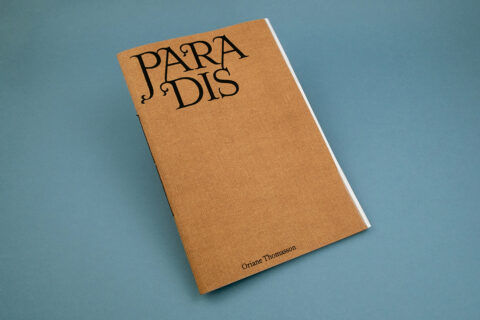
A mosaic of photographic work and archival materials assembled into a new narrative like a cabinet of curiosities.